Panel 2 | Regionalism in civil procedure
Regionalism in civil procedure – what will its future be?
The second Panel turns to a political and cultural perspective. Despite digitalization, procedural law is currently experiencing a growing regionalism that is influenced by disruptive global politics but, more importantly, based on cultural identities and shared values: within different regions, such as Ibero-America, Europe (the European Union, EFTA), Australia-New Zealand, the Russian and Eurasian area, the Arab states, or Africa (OHADA and the African Union), common traditions facilitate judicial cooperation. Often, procedural harmonization by Regional Economic Organizations facilitates cooperation. In other regions, no similar developments are found, especially in Asia (though note China's Belt and Road Initiative). Finally, American exceptionalism also marks a “region” - but maybe the same can be said of China. In addition, there is sub regionalism: examples are the Scandinavian states, the Benelux, the Andean states, and the Caribbean states. Cultural similarities are found in Lusophone countries and in the Commonwealth. Issues of discussion will include:
- Regionalism and legal families: appropriate concepts?
- Judicial cooperation and procedural harmonization within regions
- Judicial assistance and dispute resolution with “outsiders”
- The role of global cooperation in procedural law
Content Update in Progress
Please note that the panels are being updated on an ongoing basis.
Panelists
-
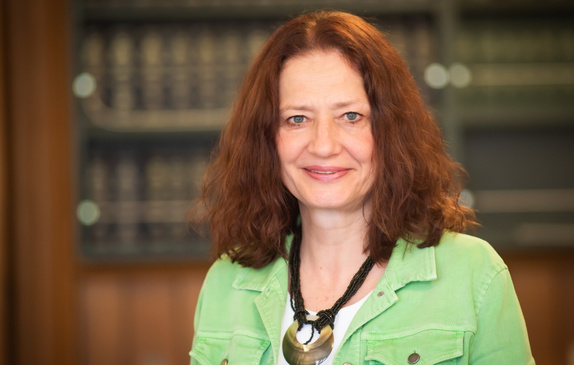
Petra Butler
Petra Butler is Executive Dean of the Faculty of Law at the University of Canterbury. Her research focuses on human rights and international commercial contracts, combining domestic and international perspectives across traditional legal disciplines. Her work responds to legal challenges in an increasingly globalised, interconnected, and interdisciplinary environment, with a particular emphasis on building synergies between fields, disciplines, and communities. Petra Butler established the Institute of Small and Micro States as an independent think tank and has provided law-reform advice to international organisations, including the Commonwealth Secretariat.
Petra Butler will be the lead panelist.
-
Alyssa King
Alyssa King is a tenured Associate Professor at Queen’s University Faculty of Law in Kingston, Ontario. Her teaching focuses on contract law, cross-border litigation, and civil procedure. Her research focuses on comparative procedure, courts, arbitration, access to justice, and the diffusion of procedural rules across legal systems, particularly in the context of federalism and international law. She holds a PhD from Yale University and a JD from Yale Law School, where she served on the editorial boards of the Yale Journal of International Law and the Yale Law Journal. A member of the New York Bar, she previously clerked for judges of the U.S. Court of Appeals and the U.S. District Court.

-
Anna Nylund
Anna Nylund is Professor of Procedural Law and co-chair of the Research Group on Civil Procedure and Dispute Resolution at the University of Bergen, Norway. She also chairs the Nordic Association for Procedural Law. Her research focuses on national, European, and comparative civil procedure, alternative dispute resolution, and the foundations of civil and family justice systems, with particular attention to children’s access to justice and rights in the Nordic countries. She has authored or co-authored four monographs, published around 70 articles and book chapters, and edited 12 books. Anna Nylund has co-chaired ten international research projects and is principal investigator of the Norwegian Research Council-funded Primary Dispute Resolution project.
 Eivind Senneset
-
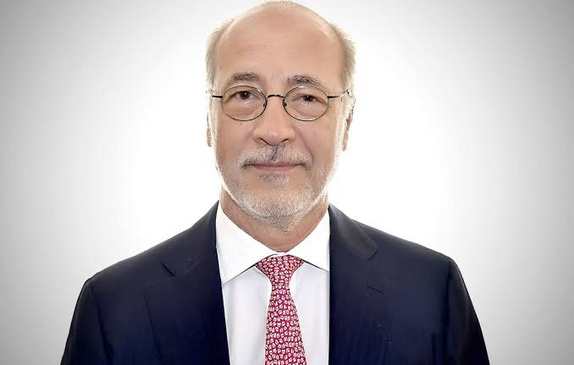
Eduardo Oteiza
Eduardo Oteiza directs the LL.M. Programme in Procedural Law at the University of La Plata, Argentina. He has held several international fellowships, including the Jean Monnet Fellowship at the European University Institute from 1987 to 1988, as well as scholarships from the Academy of European Law, the University of Bologna, and GIZ. Awarded the Enrico Redenti Prize in 2016, he has served as President of the International Association of Procedural Law since 2019. He previously chaired the Argentine Association of Procedural Law and the Ibero-American Institute of Procedural Law. In 2024, he became Director of the Procedural Law Institute of the Public Bar Association of Buenos Aires.
-
Sami Bostanji
Sami Bostanji is Professor of Law at the University of Tunis El Manar. His areas of expertise include private international law, arbitration, alternative dispute resolution, civil law, company law, comparative law, and the legal systems of Arab countries. He served as Dean of the Faculty of Law and Political Science in Tunis from 2015 to 2020. In 2025, he was invited by the Curatorium of The Hague Academy of International Law to deliver a special course during its summer session on private international law. Professor Bostanji has also been a visiting professor at the Universities of Paris I Panthéon-Sorbonne, Paris II Panthéon-Assas, Toulouse, Tours, and Bonn

-
Jin Yin
Jin Yin is Associate Professor of Procedural Law at Renmin University of China Law School. His teaching and research encompass civil procedural law, civil law, commercial law, and comparative law, with particular attention to Chinese and German procedural systems. He holds Doctor of Law degrees from Heidelberg University and Peking University, as well as a Master of Law and bachelor’s degrees in Law and Economics from Peking University. His publications address issues including enforcement, property law, and limitation periods. Professor Yin contributes to the Comparative Procedural Law and Justice project, particularly its work on res judicata.
 Copyright 2026 | All Rights Reserved by CPLJ